
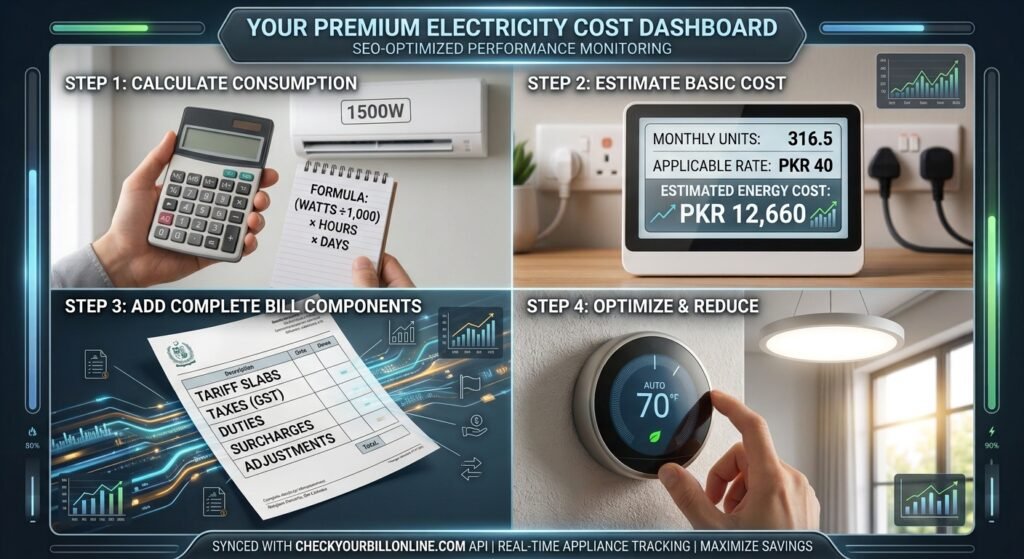
Electricity Bill Calculator:
An electricity bill calculator can help you estimate how much electricity your home may consume each month and understand the factors that influence your final bill.
Instead of waiting until the end of the billing period, you can estimate electricity consumption from your appliances, monthly units, and applicable electricity rates. This can make it easier to identify high-energy appliances and plan your monthly household budget.
However, an online estimate may not exactly match your official electricity bill because the final amount can include different tariff slabs, taxes, surcharges, adjustments, and other applicable charges.
What Is an Electricity Bill Calculator?
An electricity bill calculator is a tool that estimates your electricity cost based on your energy consumption.
The simplest calculation is:
Electricity Consumption × Applicable Electricity Rate = Estimated Energy Cost
For example, if an appliance consumes 2 units per hour and operates for several hours each day, you can estimate its monthly electricity consumption and use that information to understand its contribution to your electricity bill.
The actual calculation can be more complicated because residential electricity tariffs may use different consumption slabs and additional bill components.
How to Calculate Your Electricity Bill
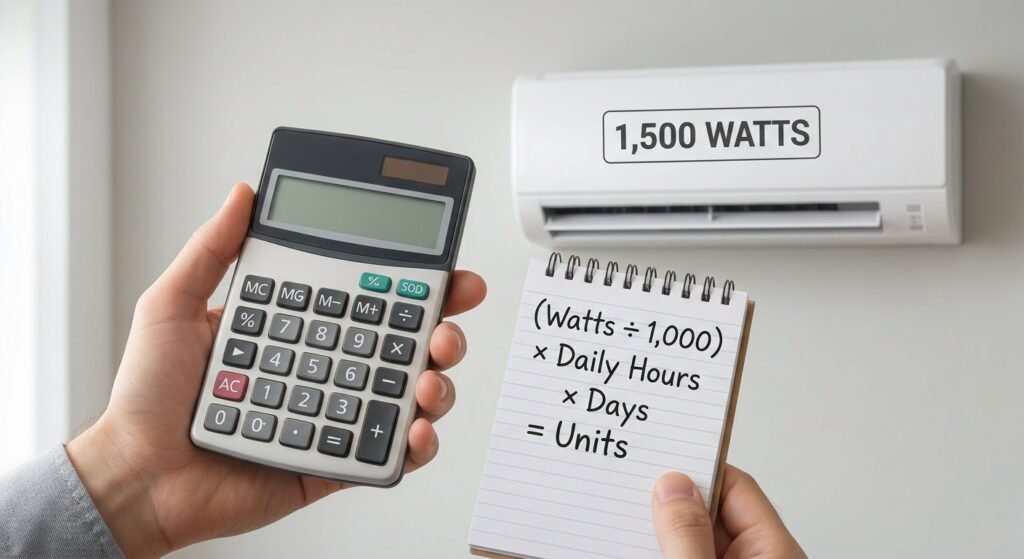
You can estimate electricity consumption using the following formula:
Power in Watts ÷ 1,000 × Hours Used Per Day × Number of Days = Monthly Units
For example, consider a 1,000-watt appliance that operates for 3 hours every day for 30 days:
1,000 ÷ 1,000 × 3 × 30 = 90 units
So the appliance would consume approximately 90 units per month under those usage conditions.
Your final electricity cost depends on the applicable tariff and other charges.
Electricity Bill Calculator Formula
For appliance-level calculations:(Electricity Bill Calculator)
Monthly Units = (Watts ÷ 1,000) × Daily Hours × Days Used
For a basic energy-cost estimate:
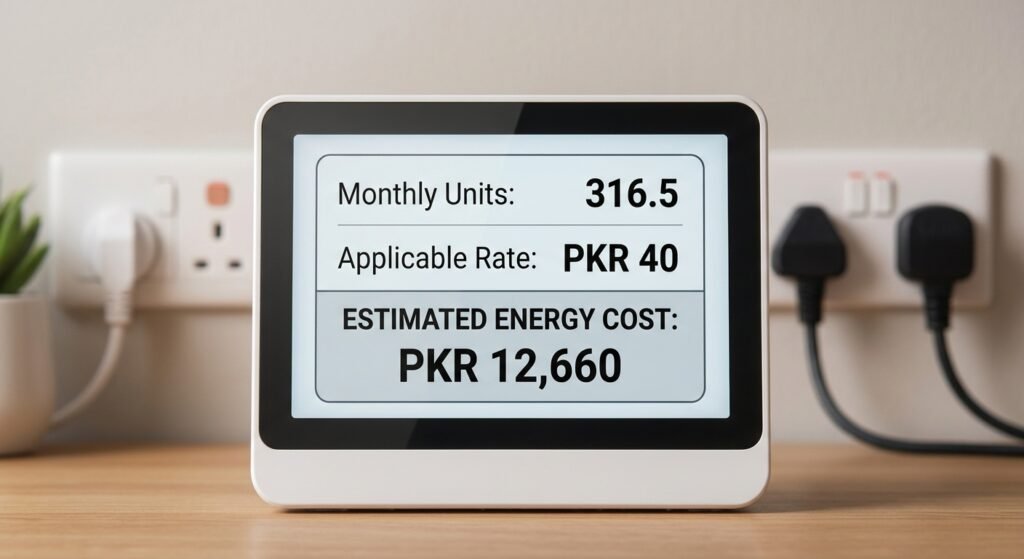
Estimated Energy Cost = Monthly Units × Applicable Rate
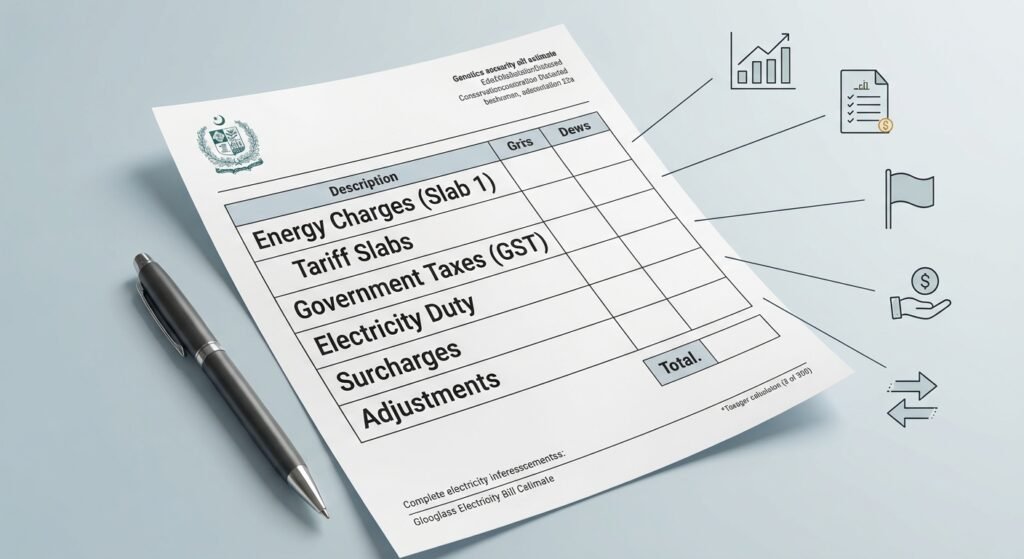
For a complete electricity bill estimate, additional components may need to be considered, including:
- Energy charges
- Tariff slabs
- Government taxes
- Electricity duties
- Surcharges
- Adjustments
- Other applicable charges
Because these components can change, always compare your estimate with your latest official bill.
Example: Calculate Monthly Electricity Consumption
Suppose a household uses the following appliances:
| Appliance | Power | Daily Usage | Approx. Monthly Consumption |
|---|---|---|---|
| Fan | 75 W | 10 hours | 22.5 units |
| LED Lights | 50 W | 6 hours | 9 units |
| Refrigerator | 150 W | 10 hours equivalent | 45 units |
| Television | 100 W | 5 hours | 15 units |
| AC | 1,500 W | 5 hours | 225 units |
These are simplified examples. Real-world consumption can vary because appliances do not always operate continuously at their maximum rated power.
The AC in this example represents the largest potential electricity consumer, demonstrating why air conditioning can have a major effect on monthly electricity consumption.
How Many Units Does Your Home Use?
Your monthly electricity consumption depends on your lifestyle and household equipment.
Common factors include:(Electricity Bill Calculator)
Air Conditioner
Air conditioners can consume substantial electricity, particularly during hot weather and when operated for many hours.
Learn more about:
How Much Electricity Does an AC Use Per Hour?
Refrigerator
A refrigerator operates throughout the day, but its compressor cycles on and off rather than continuously consuming its maximum rated power.
Fans
Fans generally consume less electricity than air conditioners, but using multiple fans for long periods can still contribute to total household consumption.
Water Pump
Water pumps can have relatively high power ratings, although their total monthly consumption depends heavily on how long they operate.
Washing Machine
Washing-machine consumption depends on the machine’s power, wash program, heating function, and frequency of use.
Why Is My Electricity Bill Higher This Month?
A higher bill does not necessarily mean that the electricity price increased.
Several factors can increase your bill:
- Higher electricity consumption
- Increased AC usage
- More operating hours for appliances
- Seasonal changes
- Moving into a different tariff slab
- Applicable taxes and charges
- Surcharges or adjustments
- Changes in meter readings
- Estimated rather than actual readings
The first thing to check is the difference between your current units and previous units.
If your units increased substantially, identify which appliances were responsible for the additional consumption.(Electricity Bill Calculator)
Electricity Units vs Electricity Bill
These are two different things.
Electricity units represent the amount of electricity consumed.
Electricity charges represent the cost associated with that consumption.
Total bill amount may include additional taxes, duties, surcharges, adjustments, and other applicable charges.
This is why multiplying your units by a single rate may not reproduce the exact amount shown on your official bill.
How to Estimate Your AC Electricity Cost
Air conditioning is one of the most important areas to consider when estimating household electricity consumption.
Use this basic formula:
AC Power in kW × Hours Per Day × Days Per Month = Estimated Monthly Units
For example, a theoretical 1.5 kW load operating for 5 hours per day for 30 days would use:
1.5 × 5 × 30 = 225 units
This is only an example.
Actual AC consumption can be lower or higher depending on:
- Inverter technology
- Temperature setting
- Room size
- Outdoor temperature
- Insulation
- AC efficiency
- Compressor operation
- Maintenance
- Number of operating hours
How to Reduce Your Electricity Bill

1. Reduce unnecessary AC usage
Use your air conditioner only when necessary and avoid cooling an empty room.
2. Maintain your AC
Dirty filters can reduce cooling efficiency and may cause the system to work harder.
3. Use efficient appliances
When purchasing a new appliance, compare its energy consumption and efficiency ratings.
4. Switch off unused appliances
Turn off appliances when they are not needed.
5. Use LED lighting
LED lighting generally requires less electricity than traditional incandescent lighting.
6. Monitor your monthly units
Keep a record of your electricity consumption. A sudden increase can help you identify unusual usage.
7. Compare appliance consumption
If your electricity consumption is high, calculate the approximate monthly consumption of major appliances.
Electricity Bill Calculator for Different Utilities
Pakistan has multiple electricity distribution companies, so users should identify the provider responsible for their connection.
CheckYourBillOnline.com can organize bill-related information into dedicated sections for providers such as:
- FESCO
- LESCO
- MEPCO
- GEPCO
- IESCO
- PESCO
- HESCO
- SEPCO
- QESCO
- K-Electric
Users should always verify billing information against the latest official bill and the relevant electricity provider.
Can an Electricity Bill Calculator Give the Exact Bill?
Not necessarily.
A calculator can provide an estimate, but the exact payable amount depends on the tariff structure and charges applicable to your account and billing period.
The final official bill may include:
- Different unit-rate slabs
- Taxes
- Duties
- Surcharges
- Adjustments
- Other applicable charges
Therefore, use an online calculator to understand and estimate consumption, but use your official bill for the exact payable amount.
Electricity Bill Calculator vs Official Bill
An electricity calculator is useful for:
- Estimating monthly expenses
- Understanding appliance consumption
- Comparing energy usage
- Planning a household budget
- Finding energy-saving opportunities
Your official bill is used to determine:
- Actual billed units
- Applicable tariff
- Taxes and charges
- Due date
- Total payable amount
Both serve different purposes.
Frequently Asked Questions
What is an electricity bill calculator?
An electricity bill calculator estimates your electricity cost using consumption, appliance usage, or applicable electricity rates.
How do I calculate electricity units?
Multiply the appliance’s wattage divided by 1,000 by the number of hours used per day and the number of days used.
How much electricity does a 1,000-watt appliance use?
A 1,000-watt appliance operating for one hour consumes approximately 1 unit (kWh).
Does an AC use a lot of electricity?
An AC can significantly increase household electricity consumption, particularly when operated for long periods.
Why does my electricity bill differ from my calculation?
Your calculation may not include tariff slabs, taxes, surcharges, adjustments, or other charges included on the official bill.
Can I calculate my bill from meter readings?
You can estimate consumption by comparing the current meter reading with the previous reading, provided the readings are accurate and measured using the appropriate units.
How can I lower my electricity bill?
Reducing unnecessary appliance usage, improving AC efficiency, using energy-efficient appliances, and monitoring monthly consumption can help reduce electricity use.
Final Thoughts
An electricity bill calculator is a useful way to understand how your household’s electricity consumption affects monthly expenses.
Start by monitoring your monthly units and calculating the approximate consumption of major appliances. Air conditioners, water pumps, refrigerators, and other high-use appliances can have a significant effect on total consumption.
Remember that an online calculation is an estimate. For the exact amount you need to pay, always check your latest official electricity bill and the applicable tariff and charges.
For more electricity-bill information, explore the relevant utility section on CheckYourBillOnline.com.